
battery energy storage system
The global energy demand is expected to double by 2050. Given the optimised use of fossil fuels and the necessity to reduce greenhouse gas emissions and energy independence, resorting to renewable energies has now become inescapable.
Energy Storage- Grid Lithium-ion batteries are still the dominant energy storage technology for large-scale plants to provide grids with renewable energy, but this will change to more advanced flow battery chemistries. Large battery-powered systems like California's world’s largest 400-megawatt capacity Moss Landing battery storage system are being developed today. As many U.S. power grids see continued strain and blackouts amid fires, freezes, and other factors, keeping the lights on when the grid goes down could be a matter of building new energy storage solutions that supplement existing lithium-ion power. Our lives are battery-powered, and as the energy transition progresses, batteries will play an even bigger role in our everyday lives. As we explore the possibilities of electrifying key sectors, the technology powering batteries is more important now than ever. This is why the Biden administration has committed $3.1 billion to spur EV battery production amid other policy changes backing battery technology development and commercialisation. For now, as long as manufacturers stay attuned to the new possibilities unlocked by better battery technologies, the world should expect innovation on a never-before-seen level.
Powering the Future: Emerging Trends in Grid-Scale Battery Storage
The battery storage market is driven by the potential of technology to enable more renewables on the grid and create a smarter energy system. Since then, the Battery Energy Storage Systems (BESS) market has grown. According to a recent report by Statista, the BESS market was estimated at roughly 5.3 billion U.S. dollars in 2021. Driven by the increasing demand for renewable energy, the global battery energy storage market is estimated to be over 10.8 billion dollars by 2026, with the Asia-Pacific region expected to boast the largest battery storage market that year. Providing safety and security for our energy grid, BESS balance the supply and demand of electricity on the grid, reducing our reliance on fossil fuels and facilitating more renewable energy.
Advancements in battery technologies are highly significant for the large-scale energy storage systems (ESS) industry. Key monitoring developments include cell longevity and degradation management, energy density, fire safety, and non-lithium chemistries.
Non-lithium chemistries
As demand for lithium increases, there is a growing interest in alternative battery chemistries to alleviate the pressure on supply.
Redox flow batteries, especially vanadium redox flow batteries (VRB), offer the most promising alternative to Li-ion and are already in use in stationary storage systems.
Another alternative is the sodium-ion battery. Sodium is a more abundant, lower cost, less flammable, and more sustainable material than lithium. However, sodium batteries have a lower energy density and a reduced cycle life compared with Li-ion.
Zinc batteries are another alternative, utilising a non-toxic, abundant element which has a lower environmental impact than lithium. Conversely, zinc has a lower energy density and reduced life span than lithium. Zinc-air, zinc-ion, zinc-manganese and zinc-carbon batteries are all possible, with current research directed to improving energy density and cycle life.
Metal Batteries like Aluminium-ion are starting to gain traction. New Battery Chemistries can take the lead in the energy storage market. One great example is CMBLu.
Battery energy storage systems are growing dramatically in scale throughout the U.S., used not only to balance out the intermittencies of renewables such as wind and solar, but also to aid gas-fired power is dealing with mind-blowing swings in transient load from AI factories and data centers.
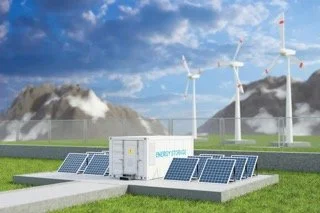
U.S. developers installed a record 58 GWh in battery storage generation last year, according to the Solar Energy Industries Association and Benchmark Mineral Intelligence. By the end of 2026, the total installed capacity will exceed 150 GWH throughout the nation, elevating batteries to near parity with traditional power generation resources.
Battery energy storage systems are increasingly valued by developers, yet not all BESS are commercially viable for every application, nor are they being utilised in the most effective way. The technical aspects may be well known, but the value outcomes are a different matter and require customisation.
Surprise! Trump DOE Retains 80% Biden Era Energy Funding Awards
Despite a shift towards fossil fuels and nuclear, the Trump DOE preserved numerous renewable and decarbonization projects, including nuclear plant restarts and critical minerals, reflecting a nuanced energy policy approach. Despite the Trump Administration’s demonstrated preference in favor of baseload resources such as natural gas and nuclear, the reinstated awards include projects in grid resiliency, renewable energy and critical minerals, according to reports. ( Still troublesome, and not the best circumstances ) Despite setbacks, the industry continues to evolve with new opportunities in microgrids, AI, and renewable integration, promising a bright future for energy storage technology. Despite setbacks, the industry continues to evolve with new opportunities in microgrids, AI, and renewables.
NEXTECH BATTERIES, INC
Carson City, Nevada 89706
Founded in 2016 to leverage Li-S energy storage technology developed at Lawrence Livermore Laboratories into production. The corporation is venture-capital-backed and privately funded, conducting internal research and development programs to enable LiS chemistry through production. With the successful implementation of NexTech’s current Li-S chemistry, the company is under contract with the California State Energy Resources Conservation and Development Commission to design and demonstrate a grid-integrated battery energy storage system that utilises the unique Li-S battery cell at a utility-scale. In addition, it designs, develops, and fabricates a compatible battery management system to demonstrate and verify the performance data. The project scales up the Li-S battery module system into a grid-integrated system for installation, commissioning, monitoring, and performance data collection.
TECHNICAL SPECS
BUSINESS PLAN
PROPOSITION
NEXTECH MANAGEMENT DECK
REN ENERGY INTERNATIONAL CORP.
Kelowna, British Columbia
Gasification of residual wood to green gas with strong government support. REN was selected by Foresight Canada as one of the Top 50 Most Investable Canadian Clean Fuel Startups — reinforcing institutional confidence in REN’s strategy and execution capability
FACT SHEET
companies under PRIOR agreement

Brill Power
3-5 Hythe Bridge St, Oxford OX1 2EW, United Kingdom
The Battery Intelligence Platform: Transforming stationary energy storage and electric vehicles.
Battery Intelligence Platform Comprised of Three Technologies
BrillCore
The BrillCore utilises the patented active loading technology to enable benefits such as up to 60% longer battery lifetime, up to 46% more energy from aged batteries, faster-charging rates, and improved safety. It is scalable to any system and integrates DC/DC conversion.
BrillOS
Universal Operating System The world’s first future-proof, hardware-agnostic Operating System for batteries.
BrillAnalytics
Connected Intelligence Delivers end-to-end data and insights for safe and optimal battery use.

CERENERGY®
CERENERGY® is a game-changing Solid State Sodium Chloride CERENERGY® Battery for Grid Storage.
Altech Batteries Ltd is commercialising a 120 MWh solid-state sodium chloride battery production facility to produce 1MWh batteries for the renewable energy and grid storage market.
The CERENERGY® Batteries are ultimately fire and explosion proof, operate in a large temperate range, have a long life of over fifteen years, can be charged and discharged up to three times per day, and do not use lithium, copper, cobalt, graphite or manganese. The battery technology uses common table salt, developed by the world-leading German government-owned research and development institute Fraunhofer.
- No graphite or copper in CERENERGY ® Costs of Production Big Advantage
- Salt is cheap–Nickel is the only costly ingredient
- No lithium cobalt graphite or copper
-Game-changing technology for grid storage
-5x energy, 6x power